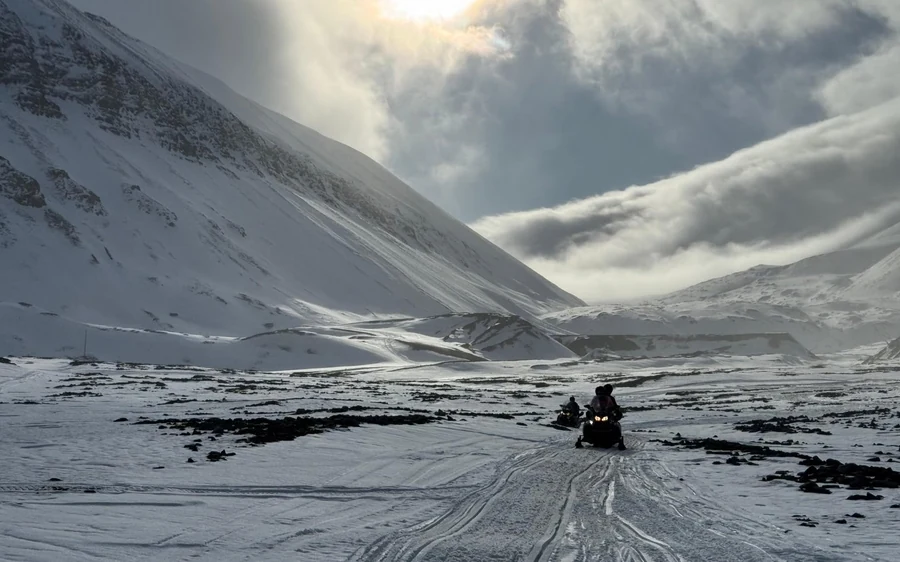
Our top pickRated 5.0
3h 30mSvalbard: Exploring Ice Cave Adventure by Snowmobile
★ 5 · 6 reviews
- Three and a half hours, through Svalbard winter wilderness
- Hidden ice cave
- Frozen waterfalls
- Free cancellation
$344$98.29 / hour
Check availability→ What to wear
Dressing for a cave trip here is dressing for three different situations in one morning: a heated room while you kit up, a snowmobile in open wind, and a slow walk underground where you stand still and cool down fast. The answer is layers you can open and close — a wool base, a warm middle, a windproof and waterproof shell, two pairs of socks and boots above the ankle. Many operators lend an insulated suit and boots over the top, and the listing page is where that is stated, so check yours rather than assuming it either way.
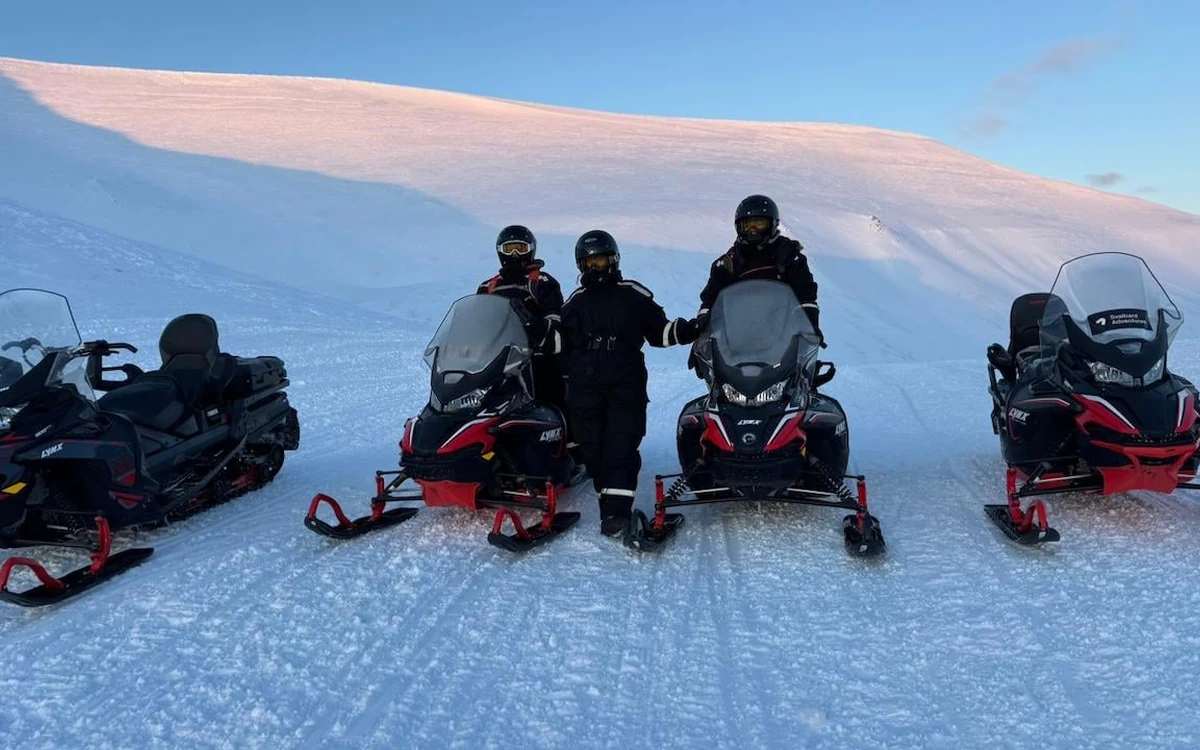
Quick answer
The short answer. Wool next to your skin, fleece or wool over it, a windproof and waterproof shell on top, thin socks under wool socks, boots above the ankle, a hat and mittens. If the operator lends you an insulated suit and boots, all of the above goes underneath it and you will be comfortable. The trip that puts this kit to work hardest is $926 at seven hours; the shortest exposure is $318 at 2h 30m. Our pick, $344, sits at 3h 30m in between.
The principle
A cave morning has three temperatures in it and one thick coat can only answer one of them.
Kitting up. Indoors, warm, pulling on a suit. If you have dressed in a single heavy jacket you are already too hot, and sweating before you leave is the one thing that genuinely makes the rest of the morning cold.
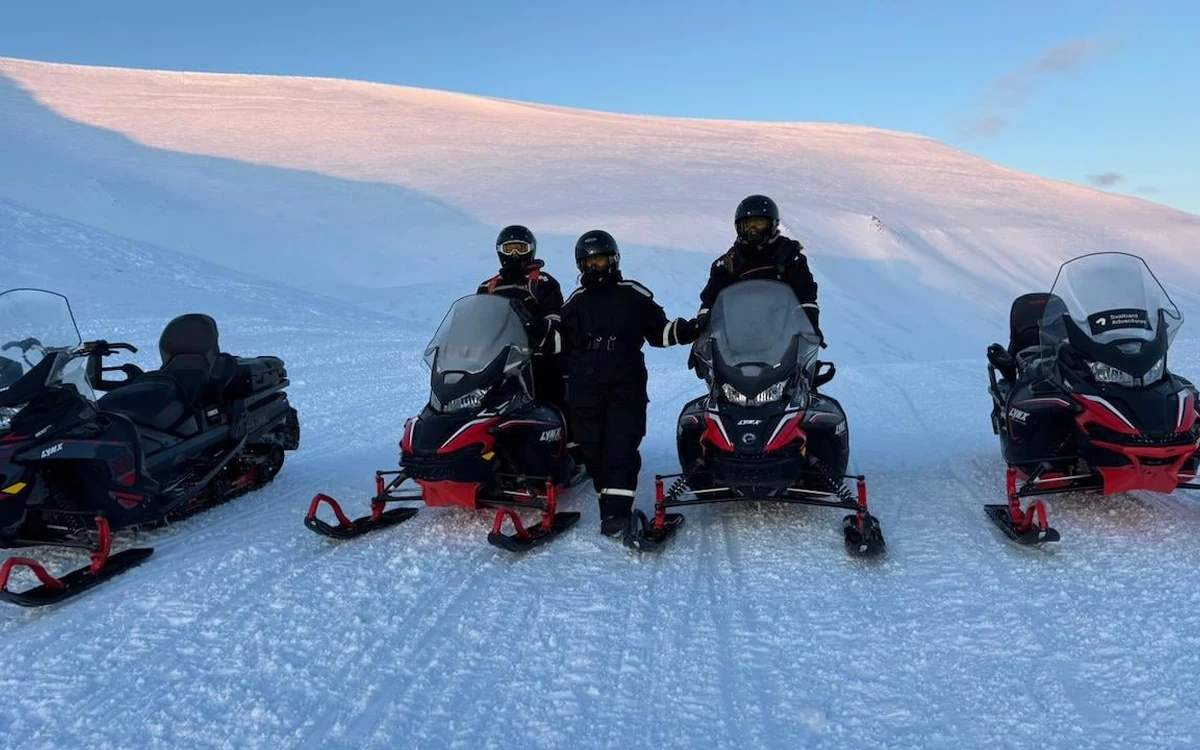
The ride. Moving air, and quite a lot of it. This is where the windproof shell earns its place, and where hands and face feel it first. On $926 this stretch is most of seven hours.
The cave. Sheltered from wind, and you are barely moving. Your own heat output drops and the layers have to hold what you already have. This is why wool next to the skin matters: damp cotton takes warmth away from you exactly here.
And then the ride back. Colder than the ride out, for the same reason. Anything you took off inside the cave goes back on before you get on the machine, not after you notice.
Layer by layer
Four layers and two accessories. Nothing exotic, and nothing that needs buying at the airport.
| Layer | What it is | Why | Common mistake |
|---|---|---|---|
| Basenext to skin | Wool long top and long johns | Holds warmth when damp, which is the state you will be in after kitting up | Cotton — it cools you once it is damp |
| Middlethe adjustable one | Fleece or wool jumper and trousers | This is what you add or remove, not the shell | Only one thin layer, with nothing to change |
| Shellouter | Windproof and waterproof jacket and trousers | The snowmobile makes its own wind, and snow is wet where you kneel | A warm but unsealed coat that the wind goes straight through |
| Feettwo pairs | Thin liner sock under a wool sock, boots above the ankle | Two thin layers trap more air than one thick one | Thick socks jammed into tight boots, which cuts circulation |
| Headunder the helmet | A thin warm hat | The helmet goes over it, so bulk is the enemy | A thick bobble hat that will not fit under the helmet |
| Handsthe first to complain | Mittens, with a thin liner glove | Fingers together stay warmer; the liner lets you use a camera briefly | One pair of thin gloves and nothing else |
The lending
On a lot of Svalbard winter trips an insulated suit, boots, a helmet and sometimes mittens are handed out at the start. That changes the shopping list, but it does not replace it.
What lending covers. The outermost layer and the feet. A one-piece suit is built for sitting on a machine in wind, and the boots are warmer than most people own. Helmets are handed out because the ride requires them.
What stays yours. Everything under it. The base and middle layers are the part nobody can lend you to fit, and they are the part that decides whether you are comfortable standing still in a cave. Socks are yours too.
How to find out which applies. Read the listing page of the tour you are looking at. The four cave listings here — $318, $344, $402 and $926 — each state their own inclusions, and they are not identical. This is worth two minutes rather than a guess.
If nothing is lent. Longyearbyen has outdoor shops and rental, and plenty of visitors hire a suit for the week rather than fly with one. It is a normal thing to arrange on the ground.
Book direct
The 3h 30m cave run, the seven-hour day where the clothing really counts, the snowshoe walk where you make your own heat, and the mine, which is indoors.
★ 5 · 6 reviews
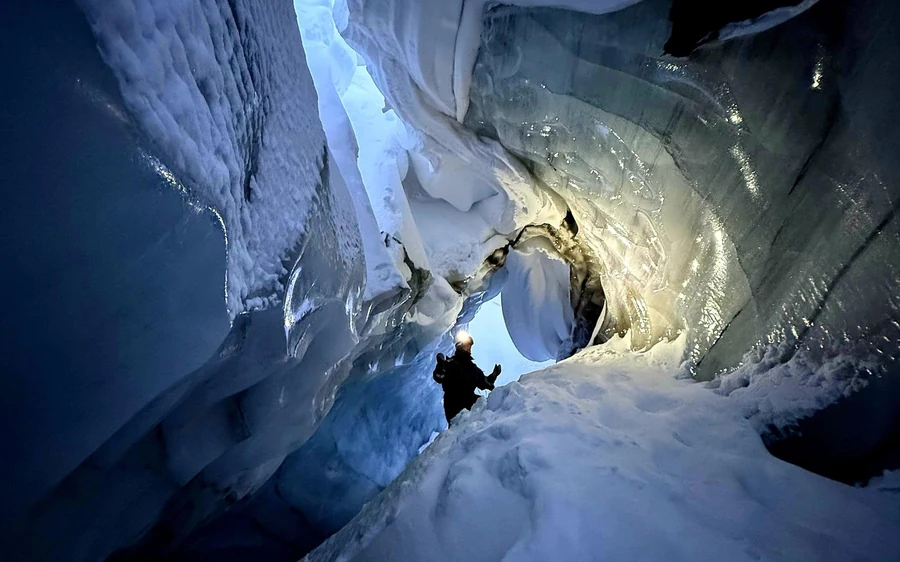
★ 4.7 · 4 reviews
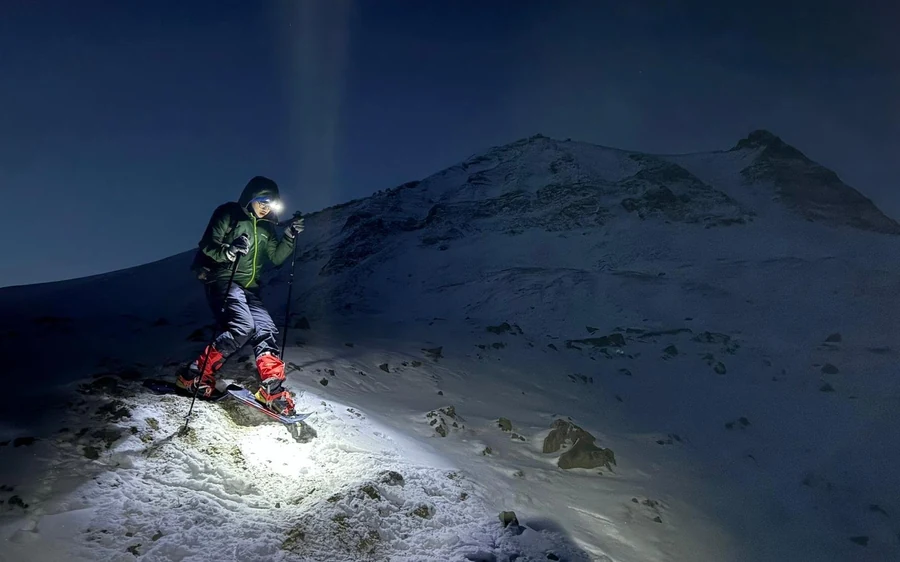
★ 4.8 · 13 reviews
★ 4.8 · 515 reviews
By trip
The same list, weighted differently depending on what you have booked.
A cave morning
Full layers under whatever is lent. You are exposed on the ride and static in the cave, which is the combination the list is written for.
A long snowmobile day
The most demanding booking here. Mittens over gloves, a spare hat, and nothing cotton anywhere near your skin.
A walk to the ice
You generate heat walking and lose it at the stops. The adjustable middle layer matters more here than the shell.
Indoors
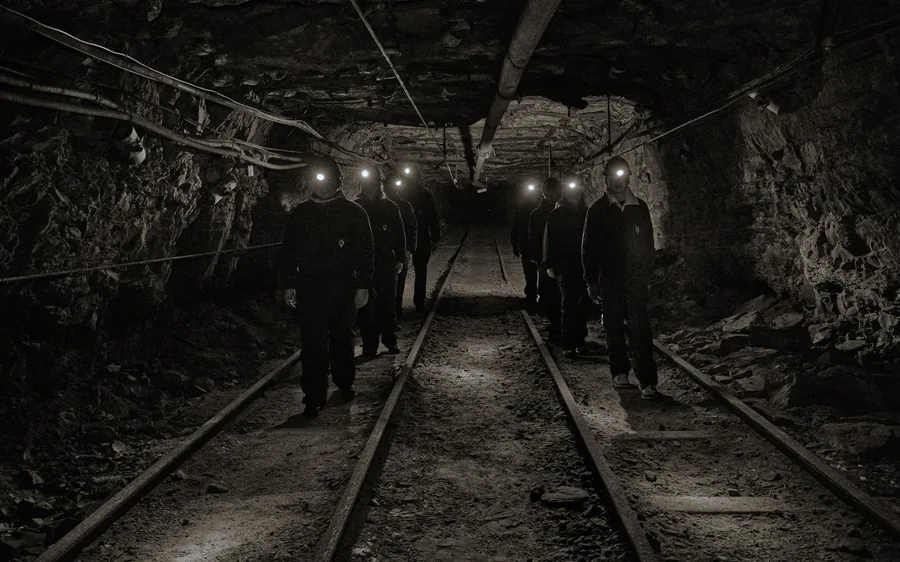
Underground at Gruve 3 the operator sets you up for the mine itself. Warm clothes for the walk to the entrance and that is the extent of it.
The extras
None of these is essential and all of them are cheap.
A spare pair of socks. Feet get damp from your own warmth long before anything else does. Dry socks for the drive back are the cheapest comfort on the list.
A thin liner glove. Mittens are warmer, but you cannot work a camera in them. A liner underneath means thirty seconds of bare-handed fumbling becomes thirty seconds of thin-gloved fumbling.
Something over the face. A buff or neck gaiter under the helmet takes the wind off the one bit of skin left uncovered on the ride.
Camera batteries somewhere warm. Cold drains them quickly. An inside pocket, against your middle layer, keeps a spare usable for the shots inside the ice.
Nothing that has to stay clean. You will kneel, you will lean on ice and you will sit on a machine. Dress in what you do not mind getting wet at the knees.
The other half
Outdoor shops are very good at selling Arctic trips more equipment than an Arctic trip needs. Here is the short list of things people buy and then carry home unused.
An expedition-grade parka. If a suit is lent to you, the heaviest coat you own is dead weight in a suitcase. Your own shell only has to survive the walk to the meeting point and the days you are not on a machine.
Crampons or technical footwear. The cave walk is short and stooping rather than climbing, and the snowshoe trip hands you snowshoes. Warm boots with a gripping sole cover both.
Heated everything. Battery socks and hand warmers are pleasant and they are not a substitute for the layer order. Cold generally arrives because something underneath was cotton or something on top was not windproof, and no battery fixes either.
A second big bag. Two or three nights of winter trips is a small amount of clothing, because you will wear the same base layer under the same suit each day. What you want is one change of socks per day and one spare of everything else.
What is worth the money instead is the wool base layer, if you do not own one, and a pair of mittens that actually fit over a liner glove. Those two do more for the morning than anything else on a shop wall.
Mistakes
Every one of them is fixable the night before, and awkward to fix on the ice.
A cotton T-shirt under everything else is the single most common error. Once it is damp it works against you, and in a cave you are standing still.
Some listings include one and some do not. The page for the tour you are booking says which, and it takes two minutes to read.
Squeezing the foot cuts the circulation that keeps toes warm. A thin liner under one wool pair, in boots with room, works far better.
Fingers warm each other when they are together. Take mittens for the ride and a thin liner for the moments you need your hands.
The helmet is not optional on a snowmobile. A thin hat under it beats a thick hat left in the locker.
If you dress for the cave and then ride in it, you overheat on the way out and pay for it on the way back. Layers you can open are the whole idea.
Checklist
Print it, pack it, and the rest of the morning takes care of itself.
The layer you will not see all day and will be glad of standing still in the ice.
The adjustable middle. Bring enough that you can take something off without being down to the base.
For the ride. If a suit is lent, this still earns its place on the walk to the meeting point.
Thin under wool, in boots with room to wiggle your toes.
Small, light and the difference between enjoying the ride and counting the minutes.
Layers sorted? The next question is which cave day to book — $344 at 3h 30m is our pick.
Compare the four cave tours→Common questions
Some do — typically an insulated suit, boots and a helmet over your own layers. It is stated on the listing page of each tour, and it is not the same on all four cave listings, so check the one you are booking.
A wool base layer, a fleece or wool middle layer, and your own socks. The suit handles the wind; the layers underneath handle standing still in the cave.
Not for this. Denim is cotton, it holds damp and it stays cold once it is wet at the knees, which is where cave kneeling puts it.
The listings do not publish temperatures and we are not going to invent them. Dress for wind on a moving machine and for standing still underground, and the number stops mattering.
Warm, above the ankle, with a sole that grips. If the operator lends boots they will be warmer than most people’s own, which is one reason to check the listing.
Yes, and the light is from headlamps, so expect hand-lit photographs. Keep a spare battery in an inside pocket, because cold drains them.
Go deeper
Every way into a glacier cave from Longyearbyen, compared.
By snowcatHow you actually reach the cave: snowcat, snowmobile or on foot.
Best timeWhy the caves are a winter thing, and which months are the safest bet.
Glacier hikesWalking up to the ice instead of riding, and how hard it is.
SnowmobilesThe machine that gets you to the caves, and what a day on it is like.
Northern lightsThe polar night, and why the lights here are unlike anywhere else.
Svalbard: Exploring Ice Cave Adventure by Snowmobile
★ 5 · 6 reviews · Free cancellation 24 h