Rated 5.02 h
2 hLongyearbyen: Northern Lights Tour by Car
★ 5 · 13 reviews
- Two hours, under the Arctic sky
- Local guide
- Departs from Longyearbyen
- Free cancellation
$235$117.50 / hour
Check availability→ Northern lights
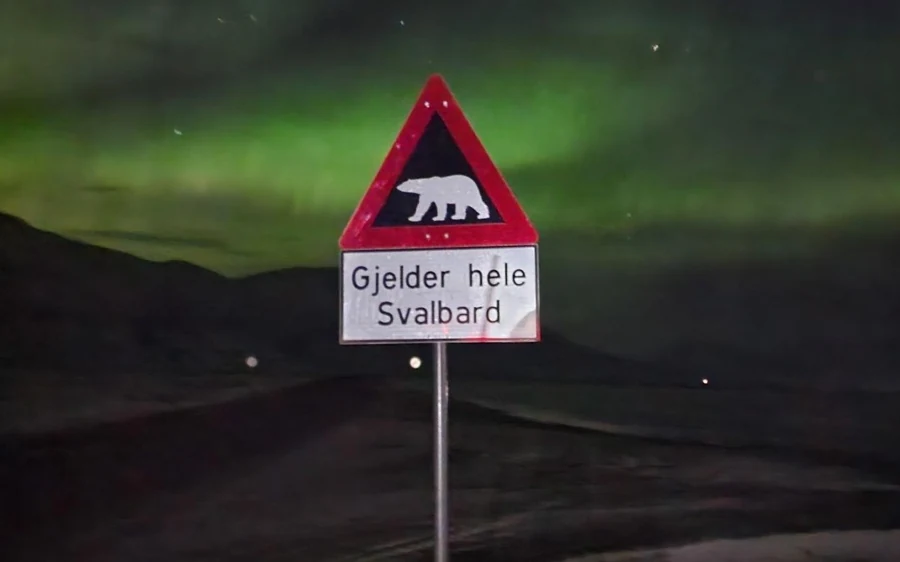
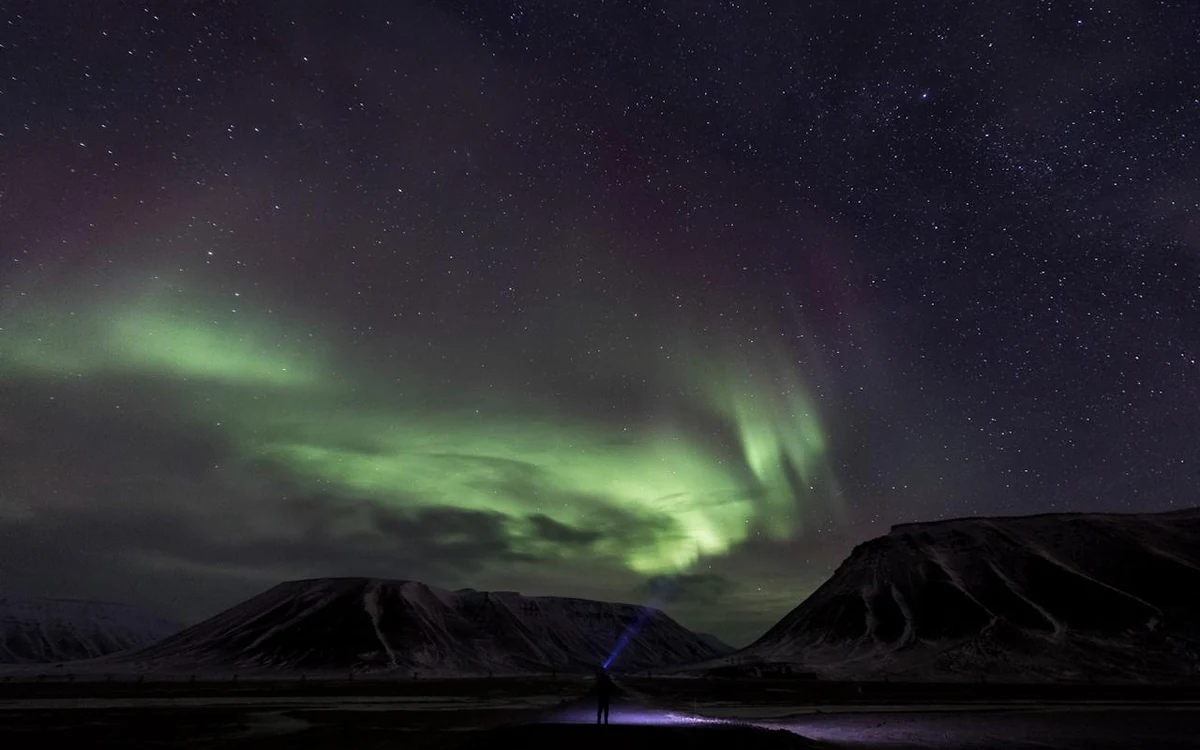
Everywhere else in the north you wait for night. On Svalbard, from late October to the middle of February, the sun does not come up at all — so the aurora can appear over Longyearbyen in the middle of what your watch calls the afternoon. That single fact is what makes this archipelago unusual for anyone chasing the lights. Two of the nineteen listings on this site are built around them: a four-hour photography tour at $206 and a two-hour run by car at $235, rated 5.0 across 13 reviews. This page explains what each one is for.
Quick answer
The short answer. Come between late October and mid-February, give yourself several nights rather than one, and do not plan the whole trip around the sky. If you want to come home with photographs rather than memories, book $206 — four hours with someone who knows the settings. If you want the shortest, warmest version and a good chance of getting away from the town lights, book $235. And fill the daytime, which is also dark, with something that runs whatever the sky does: $158 or $344.
Why here is different
The aurora is not rarer or commoner here than in northern Norway; it is the same band of activity seen from further north. What changes is the background. From late October until the middle of February the sun does not rise above the horizon at all, and that removes the thing that normally hides a weak display. Elsewhere you wait for a winter afternoon to end. Here the afternoon never brightened in the first place.
In practice this means the hunt is not tied to a particular hour. A display at eleven in the morning is perfectly possible, and people who have come specifically for the northern lights sometimes see their first one on the way back from a completely unrelated tour. It also means that a two-hour outing at four in the afternoon, which sounds like a daylight slot anywhere else, is a genuine dark-sky excursion here.
The second thing that helps is the size of Longyearbyen. It is a small place, and the lit part of it is smaller still. Fifteen or twenty minutes by car is enough to put the street lighting behind a ridge, which is exactly what $235 is for: two hours, rated 5.0 across 13 reviews, most of it spent somewhere the town is not shining into your eyes. On a clear night you do not need to go far, you need to go behind something.
What nobody can do is promise. Two conditions have to line up: activity on the sun, and a gap in the cloud. Neither is bookable. A guided tour improves the odds because someone else is watching both forecasts and choosing where to drive, and because they will move rather than sit under the one cloud in the sky. That is a real advantage, and it is an honest one — it is not the same as a guarantee, and any page telling you otherwise is selling you something it cannot deliver.
Every trip, current fare
The first two rows are the listings built around the sky. The rest are what you can put in the same trip, because the dark months are also when the cave and mine tours run. The cost-per-hour column compares a two-hour outing with a seven-hour day honestly.
| Tour | Length | Price | What is included | Cost per hour | Rating |
|---|---|---|---|---|---|
| Longyearbyen: Northern Lights Tour by CarLongyearbyen: Northern Lights Tour by Car | 2 h | $235 | $117.50 | 5 · 13 | |
| Svalbard: Northern Lights Photography Tour with local expertSvalbard: Northern Lights Photography Tour with local expert | 4 h | $206 | $51.50 | 4.6 · 36 | |
| Longyearbyen: Guided Walking Tour with a Local GuideLongyearbyen: Guided Walking Tour with a Local Guide | 2h 30m | $132 | $52.80 | 4.7 · 24 | |
| Longyearbyen: Historic Coal Mine Tour at Gruve 3Longyearbyen: Historic Coal Mine Tour at Gruve 3 | 3 h | $158 | $52.67 | 4.8 · 515 | |
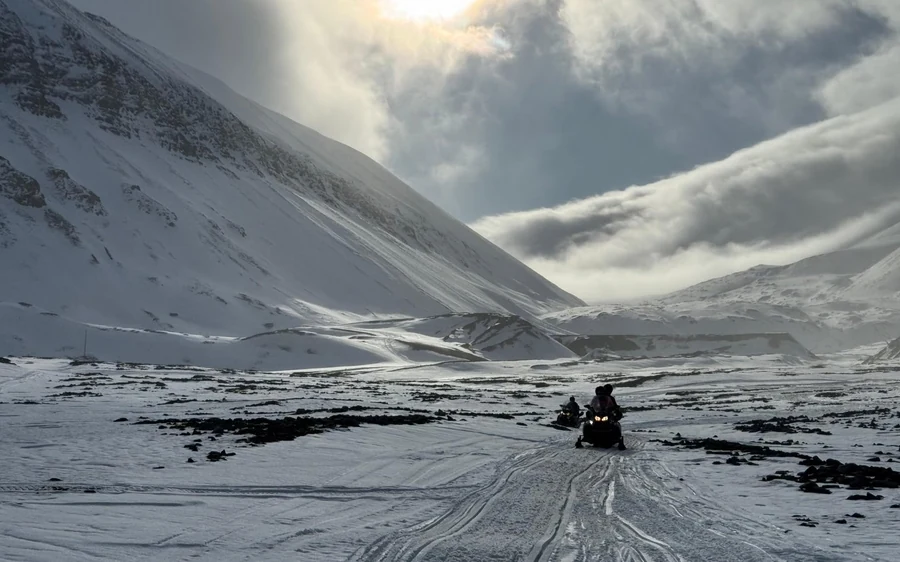
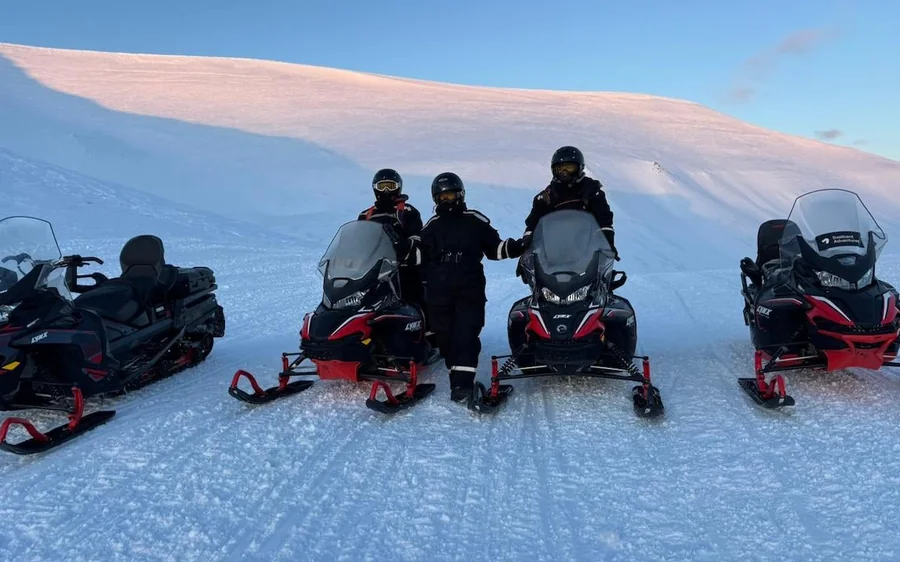
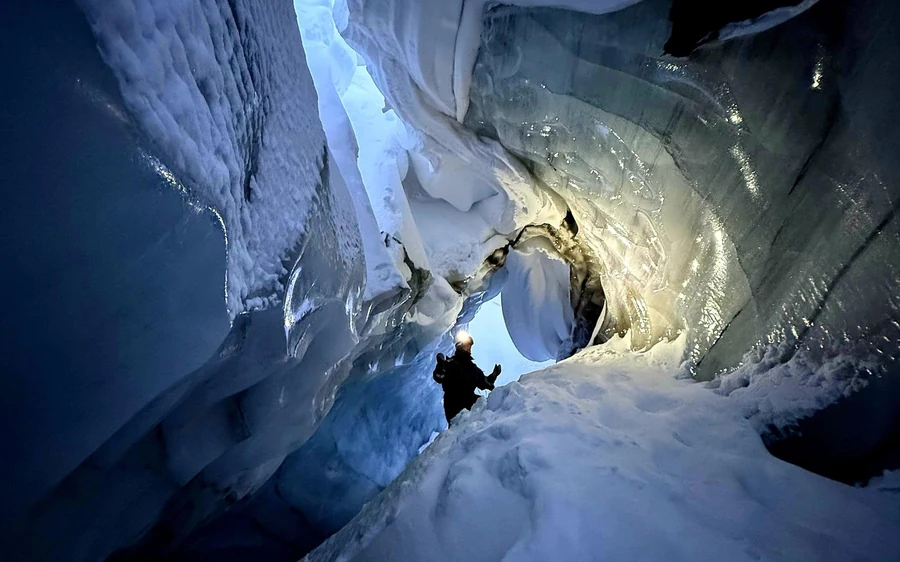
| Svalbard: Exploring Ice Cave Adventure by SnowmobileSvalbard: Exploring Ice Cave Adventure by Snowmobile | 3h 30m | $344 | $98.29 | 5 · 6 | |
| Svalbard: Snowmobile Adventure and Ice Cave ExplorationSvalbard: Snowmobile Adventure and Ice Cave Exploration | 7 h | $926 | $132.29 | 4.7 · 4 |
Which tour, and why
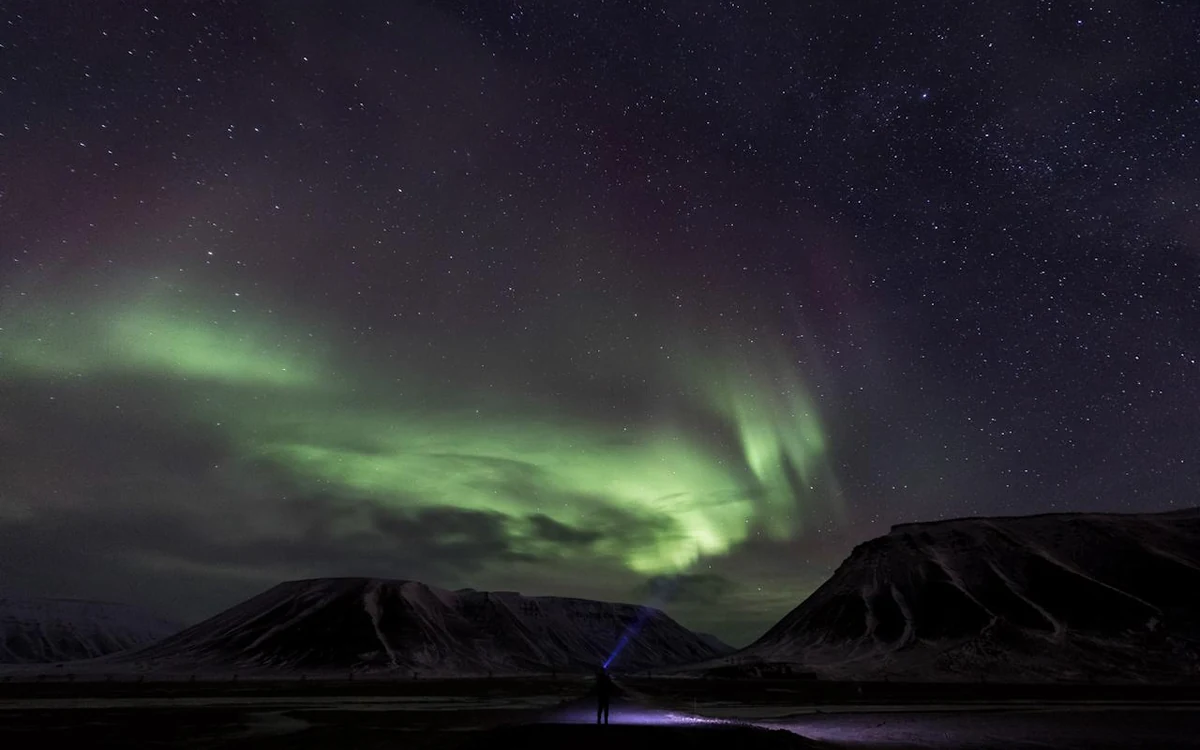
The photography tour is a lesson as much as an outing. $206 runs four hours with a local expert and is rated 4.6 across 36 reviews — the most reviewed of the two. The reason to take it is that aurora photography defeats most phones and a good many cameras in the hands of someone guessing at the settings. Long exposure, manual focus set to infinity, a tripod that does not move while the shutter is open: these are learnable in one evening with someone standing next to you, and unlearnable from a forum post at minus whatever with cold hands.
The car tour is about getting out and getting warm again. $235 is two hours, rated 5.0 across 13 reviews. You are driven out of the town glow, you stop, you look, and if the cloud is in the wrong place the driver moves. Two hours is short enough to do on an evening when you have something else planned, and the vehicle is somewhere warm to retreat to between looks — which matters more than people think when standing still in an Arctic winter.
Neither is a substitute for the number of nights you stay. This is the part worth planning around. A single night on Svalbard gives you one roll of the dice. Three or four nights change the arithmetic completely, and they cost you nothing extra in tours because the sky is on show from the doorstep of your hotel too. Book one guided outing for the skill and the transport, and treat every other evening as a chance.
Fill the daytime with something that does not depend on the sky. The great advantage of the dark months is that the other tours are running: $158 goes underground at Gruve 3 whatever the weather is doing, $344 takes you out on a snowmobile to a glacier cave, and $132 walks the town itself in 2h 30m. None of them cares whether the aurora shows up, and all of them are better company than a hotel window.
Reading the sky
Nothing here is secret and none of it is a promise. It is the short list of things that decide whether tonight is worth driving out for.
| What | Where it comes from | What good looks like | What it does not tell you |
|---|---|---|---|
| Cloud coverthe one that decides everything | Local forecast | A gap over the valleys within driving distance | Nothing about whether the aurora itself is active |
| Aurora activitythe forecast index | Space weather services | Elevated activity over the coming hours | Nothing about cloud, which will hide it regardless |
| Moonhelpful and unhelpful at once | Any calendar | Enough light for landscape in the frame | A bright moon can wash out a faint display |
| Wind and road conditionswhether you can get out | Operator | Calm enough to stand still and look up | Whether the sky will do anything once you are there |
Book direct
The two lights tours and the winter trips that run alongside them, with the current price, the rating and the number of reviews behind each listing.
★ 5 · 13 reviews
★ 4.6 · 36 reviews
★ 5 · 6 reviews
★ 4.7 · 4 reviews
What to expect
All of this comes from the listings on this page and from how the season works this far north.
Two things have to line up: activity on the sun and a gap in the cloud. A guide improves the odds by choosing where to drive. That is the whole of the advantage, and it is a real one.
The single biggest thing in your control is how many chances you give yourself. Four evenings on Svalbard beat one evening with the best guide in the archipelago.
From late October to mid-February there is no sunrise to hide it. Keep looking up between tours, not just after dinner.
This is what the photography tour is for. A tripod, a long exposure and manual focus turn a faint smudge into the picture you came for.
Watching the sky means not moving for long stretches, which is colder than walking. Layers, a hat that covers your ears, and gloves you can still work a camera in.
A short drive puts the street lighting behind a ridge. That is why a two-hour tour is a sensible length here and would not be everywhere.
It applies to every tour on this site, which is worth having when you are booking a winter evening from the other side of the world.
When to come
The aurora needs dark sky, and dark sky here is a season rather than an hour. These are the stretches worth knowing about.
Late Oct–Nov
The sun stops rising and the long night begins. Snow cover is still building, so there is less white to reflect what light there is, and the sky feels enormous.
Dec–Jan
No sunrise at all, snow on the ground and the longest possible dark hours. This is the stretch people come for, and the one where a display at midday is a genuine possibility.
Feb
The blue light returns in the middle of the day and the nights are still long. A good compromise if you want the sky and also want to see the landscape you are standing in.
Mar onwards
Daylight comes back fast, and by the spring the nights are no longer dark enough. The cave and snowmobile season carries on; the aurora season does not.
The verdict
If you want photographs, book $206. Four hours with a local expert, rated 4.6 across 36 reviews, and the listing with the most feedback of the two. You come back knowing how to shoot a dark sky, which is worth having on every evening of the trip and not only this one.
If you want the short version, book $235. Two hours by car, rated 5.0 across 13 reviews. Out of the town glow, a warm vehicle to stand next to, and a driver who will move if the cloud sits in the wrong place.
If the sky does nothing, book $158. Three hours underground at Gruve 3, rated 4.8 across 515 reviews — more reviews than any other tour we list. It runs all year and it does not care what the weather is doing.
If you want the day that defines the season, book $344. Three and a half hours, rated 5.0 across 6 reviews: a snowmobile out of town and a glacier cave at the end of it. It is our top pick, and it happens in the same dark months as everything on this page.
One thing to plan for. Book the sky tour early in your stay rather than on your last evening. If the cloud wins that night, you still have the rest of the trip; if you leave it to the end, you do not.
Months without a sunrise sound harder than they are — here is what the polar night is actually like to travel in.
Read about the polar night→Common questions
Between late October and the middle of February, when the sun stays below the horizon and the sky is dark around the clock. December and January are the deepest part of that window; February adds a few hours of blue twilight in the middle of the day, which some people prefer because you can also see the landscape. Outside that window the nights are simply not dark enough.
Yes, and it is the thing that makes Svalbard unusual. From late October to mid-February there is no daylight to drown a display, so one can appear over Longyearbyen at what your watch calls the afternoon. It still depends on activity and cloud like any other sighting, but the usual rule about waiting for nightfall does not apply here.
Both are worth doing. On a clear night the sky is visible from the edge of Longyearbyen, and every evening you are here is a chance. What a tour adds is someone watching the cloud forecast, a vehicle that can move to a gap, and, on the photography listing, the camera settings that turn a faint display into a photograph. Book one tour and treat the other evenings as bonus attempts.
Take $206, four hours with a local expert rated 4.6 across 36 reviews, if photographs matter to you. Take $235, two hours rated 5.0 across 13 reviews, if you want the shortest way out of the town glow with somewhere warm to stand. They are different purchases rather than better and worse.
Have a plan that does not need the sky. The dark months are exactly when the rest of the list runs: $158 underground at Gruve 3, $344 out to a glacier cave on a snowmobile, $132 around the town itself. Every tour on this site has free cancellation, so a plan that changes is not an expensive plan.
Go deeper
Every way into a glacier cave from Longyearbyen, compared.
By snowcatHow you actually reach the cave: snowcat, snowmobile or on foot.
Best timeWhy the caves are a winter thing, and which months are the safest bet.
What to wearLayers, boots and what the operator lends you.
Glacier hikesWalking up to the ice instead of riding, and how hard it is.
SnowmobilesThe machine that gets you to the caves, and what a day on it is like.
Svalbard: Exploring Ice Cave Adventure by Snowmobile
★ 5 · 6 reviews · Free cancellation 24 h