Our top pickRated 5.0
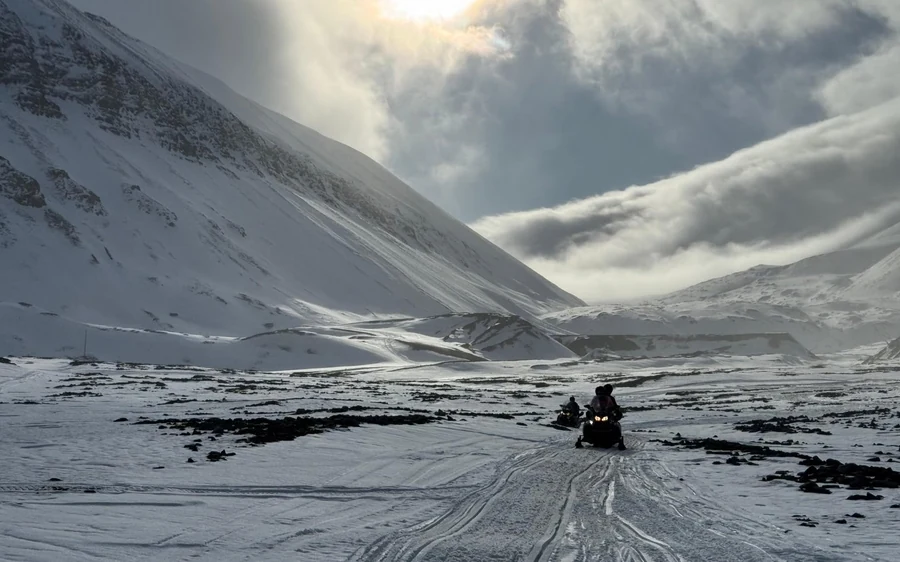
3h 30mSvalbard: Exploring Ice Cave Adventure by Snowmobile
★ 5 · 6 reviews
- Three and a half hours, through Svalbard winter wilderness
- Hidden ice cave
- Frozen waterfalls
- Free cancellation
$344$98.29 / hour
Check availability→ Best time
The caves are a winter thing, and that single line answers most of the question. They form in glacier ice when the melt stops, so they belong to the cold half of the year and the listings here run in it. Inside that half the months are not equal: the polar night runs from late October to the middle of February with no sunrise at all, and March and April give you the ice while the light has already come back. This page sets out what each part of the year actually offers and what to book if your dates are fixed.
Quick answer
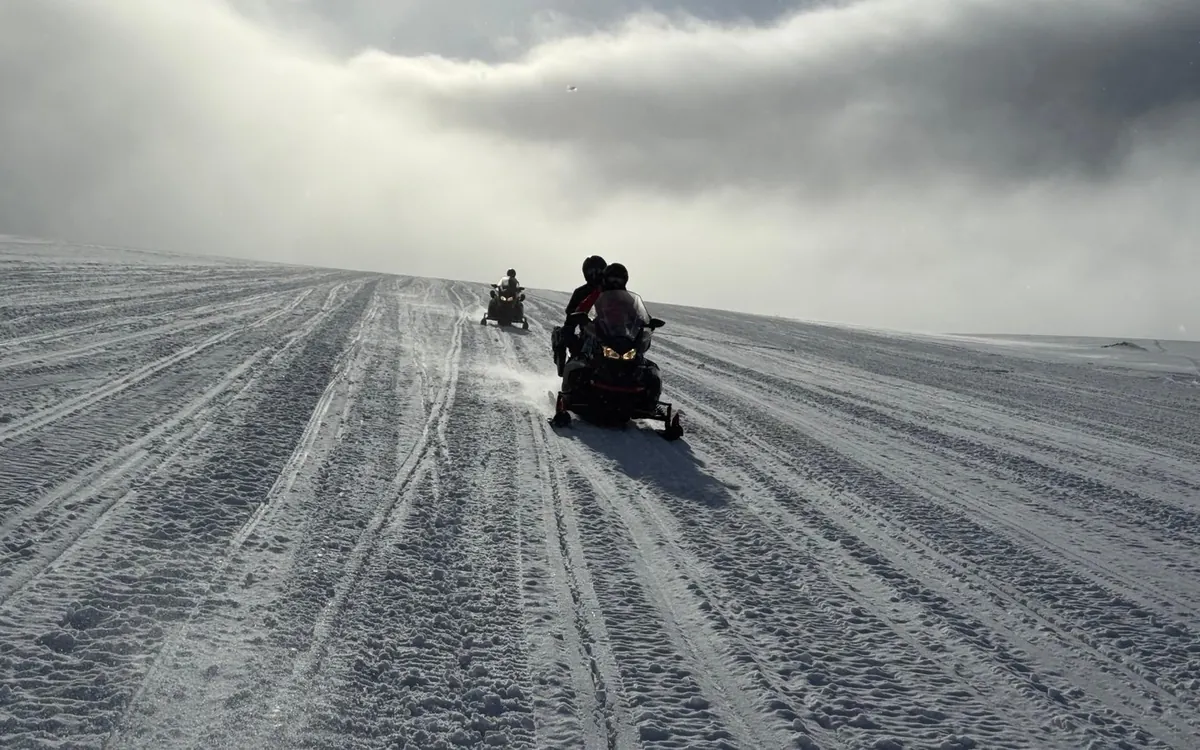
The short answer. Come in March or April. The caves are open, the snow is still firm enough for the snowmobiles the four listings use, and the sun is back in the sky, which changes how the whole landscape reads. Book $344 for the cave itself. If your dates fall in the polar night instead, you still get the ice and you also get the aurora — add $235, two hours by car, rated 5.0. If your dates are summer, the caves are not available and $508 is the day to book.
The year
Four seasons, and only two of them have caves in them. Read yours and the booking decides itself.
Late October to mid-February: the polar night. The sun does not rise. That sounds severe and mostly is not: Longyearbyen is lit, the trips run, and the darkness is the reason the northern lights are as good here as anywhere. The ice is firmly in place. What you lose is landscape photography, because the valleys you ride through are seen by headlamp and moonlight rather than daylight.
March and April: the light returns. Our pick. The sun is back over the horizon, the days lengthen quickly, and the winter snow is still deep and firm. The cave listings run, the snowmobiles have good ground, and you can actually see where you are going. If your dates are open, choose here.
May and June: the thaw. The snow goes, the machines stop, and the caves stop with them. It is a beautiful time on the archipelago and it is not cave time. The walking trips take over: $143 up Platåfjellet, $259 into the valley, $249 with the cameras.
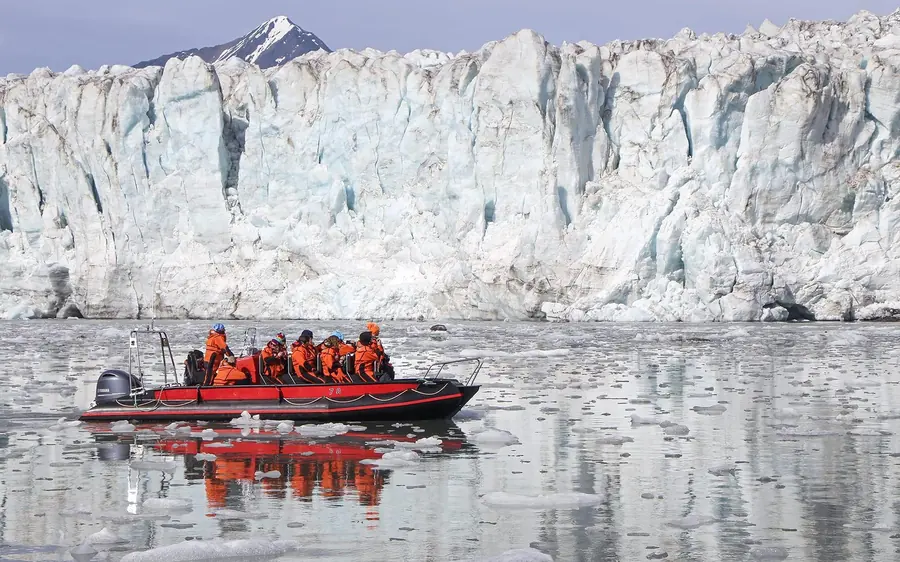
July to September: the boats. Open water, midnight sun and the sea trips. $508 runs nine hours to the Pyramiden settlement and a glacier front; $1,209 is the private photo version. The mine at $158 is underground and unaffected by any of it.
Month by month
The honest version, written by what the listings on this site actually run rather than by brochure seasons.
| When | Light | Caves | What we would book |
|---|---|---|---|
| Late Oct – mid Febpolar night | No sunrise | Open — the ice is in place | $344 plus $235 for the lights |
| March – Aprilour pick | Light back, days lengthening | Open, and the snow is still firm | $344, or $926 for the full day |
| May – Junethe thaw | Long days, then midnight sun | Not running | $259 or $259 on foot |
| July – Septemberopen water | Midnight sun | Not running | $508 by boat, and $158 underground |
The light
The polar night puts more people off than it should, so it is worth being precise about what it is.
It is not a power cut. Longyearbyen has streetlights, shops, a hotel district and a school. The town runs on its own clock and the trips leave on time. What changes is that the sky outside town stays dark, so the ride to the cave happens by headlamp.
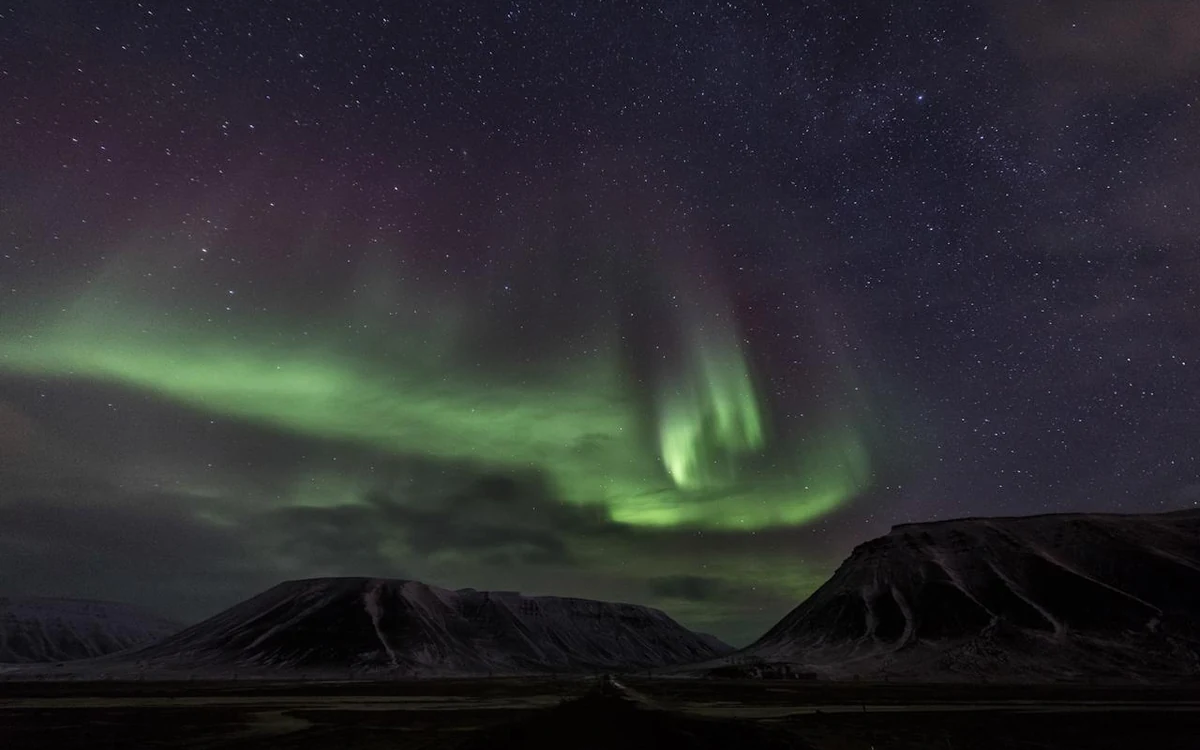
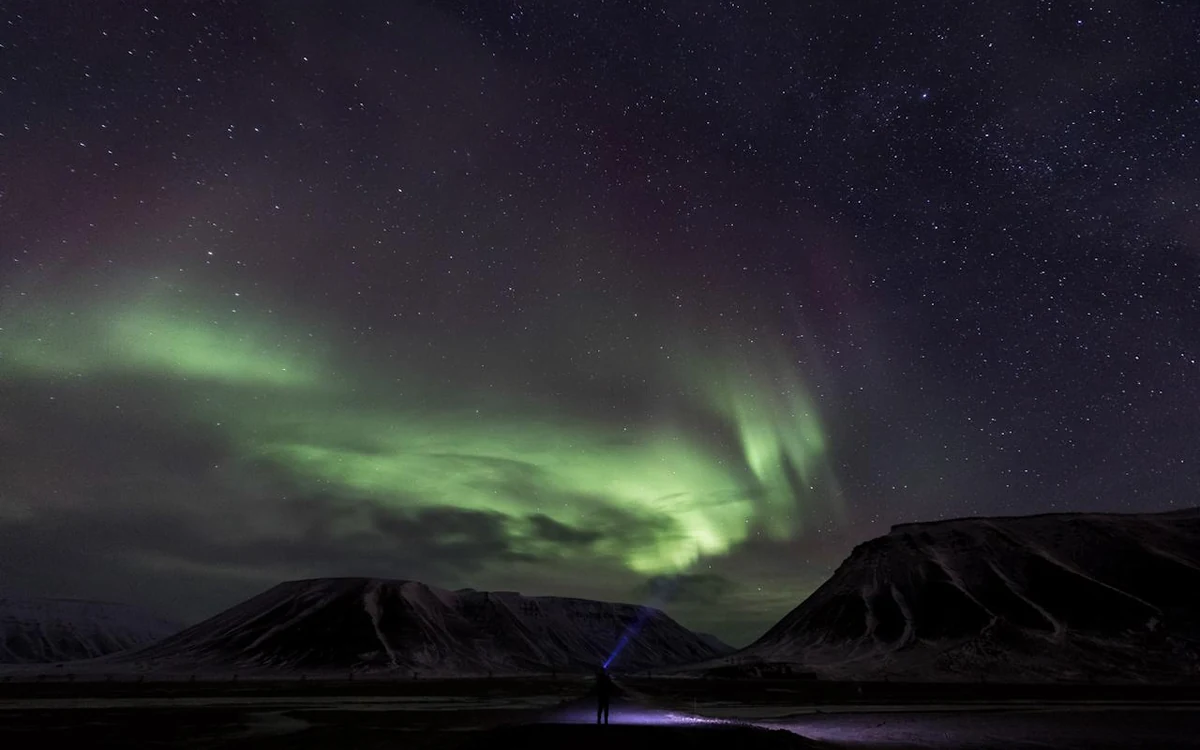
The aurora is the trade. Darkness is a requirement for seeing the northern lights, and the polar night supplies it for months rather than hours. $206 is a four-hour photography evening with a local expert; $235 is the shorter two-hour drive out to dark ground and holds a rated 5.0 across 13 reviews. Neither can promise an appearance, and neither pretends to.
Inside the cave, the sky is irrelevant. The passage is lit by headlamps in any month, so a cave visit in January looks much the same as one in April. The difference the light makes is on the way there and back.
And in March the two overlap. Early March still gives dark enough evenings for aurora hunting while the daytime has returned for the ride out. That overlap is the real reason we name March and April rather than midwinter.
Book direct
The cave in winter, the aurora in the dark months, the mine that runs whatever the season, and the summer boat to a glacier front.
★ 5 · 6 reviews
★ 5 · 13 reviews
★ 4.8 · 515 reviews
★ 4.6 · 54 reviews
The variables
Your dates settle more of this trip than your budget does.
Whether there is a cave
Four listings, all winter. Outside the cold season the honest answer is that the caves are not part of the plan.
How much you can see
March and April give you the valleys in daylight. Midwinter gives you the same route by headlamp.
The aurora
The polar night is the long window. $206 and $235 are the two listings built for it.
What replaces the ice
In summer, $508 by sea and the walking trips above town. $158 runs the whole year.
Planning
Most people give Svalbard three or four nights, and the shape of those nights matters more than the month.
Put the cave early. Weather moves trips here. Booking the cave on your first full day leaves a second chance later in the stay, and free cancellation means holding that first slot costs nothing but a click.
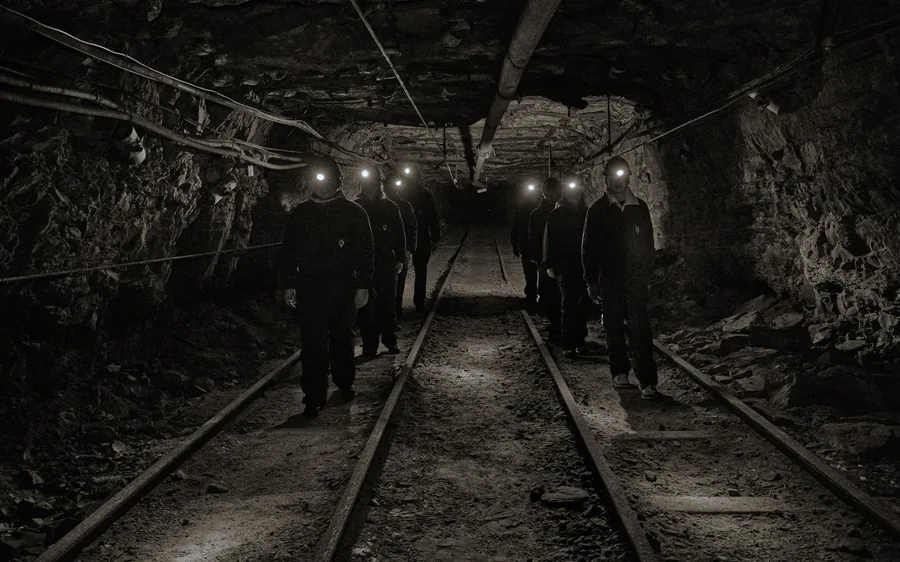
Keep an indoor day in reserve. $158 goes underground into Gruve 3 and runs all year, and at 515 reviews it is the most tested listing on this site. It is the trip that still happens when the wind is up.
Do not stack two long days together. $926 is seven hours on a snowmobile and $508 is nine hours on a boat. Either one fills a day properly; two in a row is a lot of sitting in the cold.
Leave the evenings loose in winter. Aurora trips depend on cloud, so the flexible evening is worth more than the booked one. $235 at two hours is the easiest to slot in at short notice.
The weather
Season sets what exists; weather on the day sets what runs. The two are worth keeping apart in your head, because people who have chosen a good month sometimes assume the rest is settled.
Wind is the usual reason a trip moves. Not cold, and not snowfall by itself. Riding a snowmobile across open ground in a strong wind is unpleasant well before it is impractical, and guides make that call on the morning rather than the week before. A moved trip is a normal part of a winter visit here, not a sign that something went wrong.
Which is why the spare day earns its keep. If $344 is booked for your first full morning and the wind is up, there is another morning behind it. If it is booked for your last, there is a flight. The cost of moving the cave earlier in your plan is nothing at all.
And why free cancellation is the line to read. It is shown across the listings gathered here, and on an archipelago where the wind decides the timetable it is the difference between booking three weeks out and waiting to see. Booking early gets you a seat on four cave listings that are not numerous; free cancellation means that seat is not a commitment you regret.
The indoor answer. $158 is underground, three hours, and the most reviewed listing on this site at 515 ratings. Weather does not reach Gruve 3. Holding it loosely in your plan means a blown-out day still has something good in it, whatever month you chose.
Mistakes
Each of them is a date chosen before the trip was understood.
The caves belong to the frozen months. Summer dates mean $508 and $158, which are good days in their own right.
The town is lit, the trips run and the ice is in place. What you give up is daylight on the ride, and what you get is the best window for the aurora.
The thaw takes the machines off the ground. May and June are for walking: $143, $259 and $259.
If the weather moves that day, there is no second attempt. Put it early and keep the later days as the spare.
It depends on darkness and clear sky, and no listing can sell it as a certainty. Two evenings loose beats one evening booked.
The listings do not publish numbers and we will not invent them. Dress for wind and standing still, which is the part that actually bites.
Checklist
Five minutes now, and the trip you booked is the trip you take.
Winter yes, summer no. That is the first question and it decides the rest of the page for you.
In March and April take the longer rides. In midwinter the shorter shapes lose nothing, because the cave is lit by lamp either way.
$158 underground at Gruve 3, all year, and the most reviewed listing on this site.
Only in the dark months. $235 is the short version, $206 the photography one.
Shown across the listings gathered here, which is what lets you book early against weather nobody can see.
In March and April you get the ice and the light at once — $344 is the cave booking we would make.
Compare the four cave tours→Common questions
March or April. The caves are open, the snow is firm under the snowmobiles, and the light has come back after the polar night.
No. The caves are winter shapes in glacier ice and these listings run in the cold season. In summer, $508 is the day out and $158 goes underground whatever the month.
From late October to the middle of February the sun does not rise. The town is lit and the trips run; the difference is that the ride out happens in the dark.
If the aurora matters to you, yes. $235 is two hours by car and holds 5.0 across 13 reviews, and the caves are open at the same time.
Three or four nights lets you put the cave early and keep a spare day for weather, with an indoor booking like $158 in reserve.
Not much. The passage is lit by headlamp in January and in April alike. The month changes the journey, not the ice.
Go deeper
Every way into a glacier cave from Longyearbyen, compared.
By snowcatHow you actually reach the cave: snowcat, snowmobile or on foot.
What to wearLayers, boots and what the operator lends you.
Glacier hikesWalking up to the ice instead of riding, and how hard it is.
SnowmobilesThe machine that gets you to the caves, and what a day on it is like.
Northern lightsThe polar night, and why the lights here are unlike anywhere else.
Svalbard: Exploring Ice Cave Adventure by Snowmobile
★ 5 · 6 reviews · Free cancellation 24 h